







Mortar Mix Guide
Before you mix another batch, learn how the right mortar mix, mortar mix ratio and sand selection can improve brickwork, reduce plaster cracking and minimise waste on site.
A good mortar mix depends on suitable mortar sand, the correct mortar mix ratio, controlled water and consistent batching. Small mistakes in any of these areas can lead to weak brickwork, plaster cracking and unnecessary material costs.
What you'll learn
- How to choose the right mortar sand and plaster sand
- How to use the correct mortar mix ratio
- How to batch a consistent mortar mix
- How to avoid weak cement mortar and plaster cracking
- When ready mix mortar or ready mix plaster may be a better choice than mixing on site
How to get a better mortar mix
Whether you’re laying bricks, plastering a wall or planning a building project, the quality of your mortar mix comes down to a few simple decisions. Get these right and you’ll improve workability, reduce waste and avoid many of the problems that lead to weak mortar or cracked plaster.
- Choose the right sand
Not all mortar sand and plaster sand perform the same. Sand quality has a major impact on workability, water demand and finish quality. - Use the correct ratio
A consistent mortar mix ratio is just as important as the materials themselves. Guessing ratios often leads to inconsistent results. - Measure accurately
Whether you batch by wheelbarrow or another volume measure, consistency is critical for a reliable cement mortar. - Control the water
Adding too much water may make a mix easier to spread, but it can reduce strength and increase shrinkage. - Prepare the surface properly
Brick suction, weather conditions and surface preparation all affect how well mortar and plaster perform. - Avoid unnecessary waste
Mixing the right quantity and accounting for factors such as perforated bricks can save material, labour and money.
What is a mortar mix?
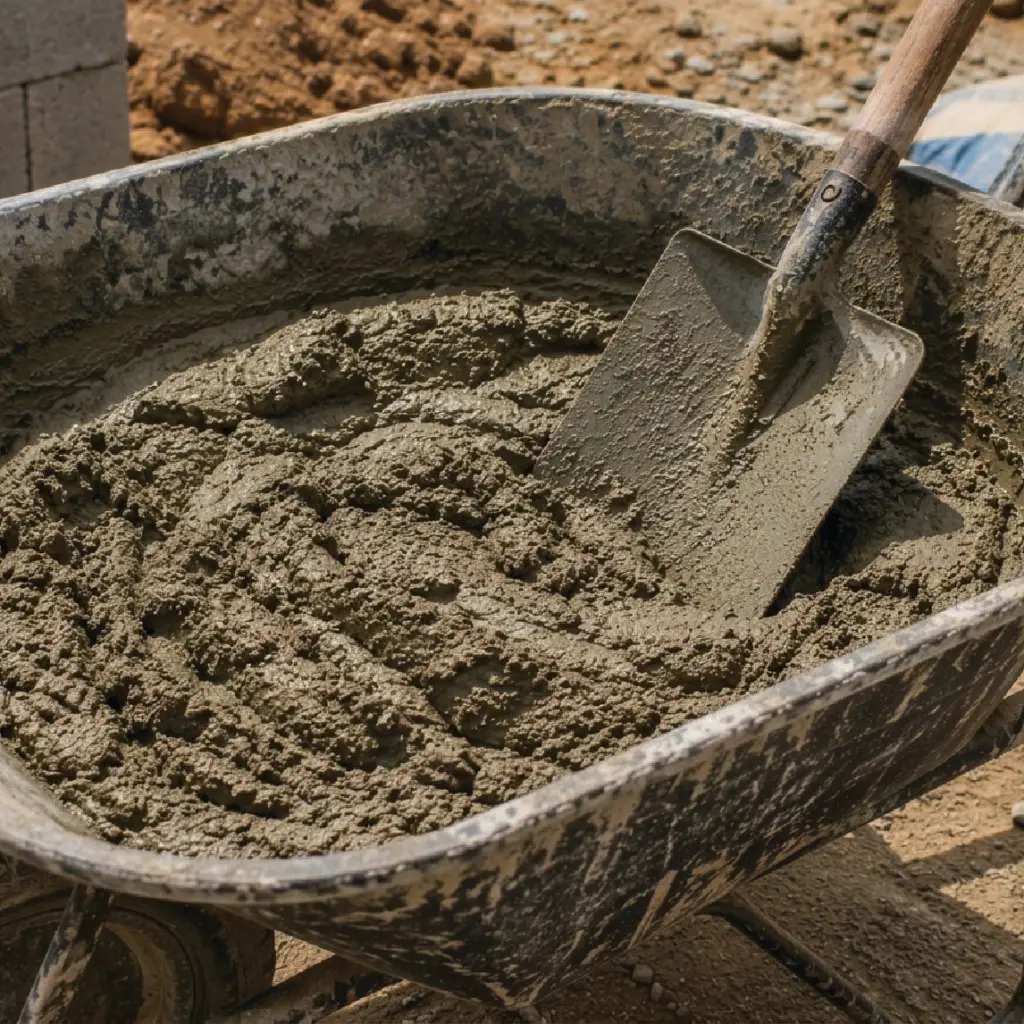
A mortar mix is a blend of cement, sand and water used to bond bricks, blocks and masonry units together.
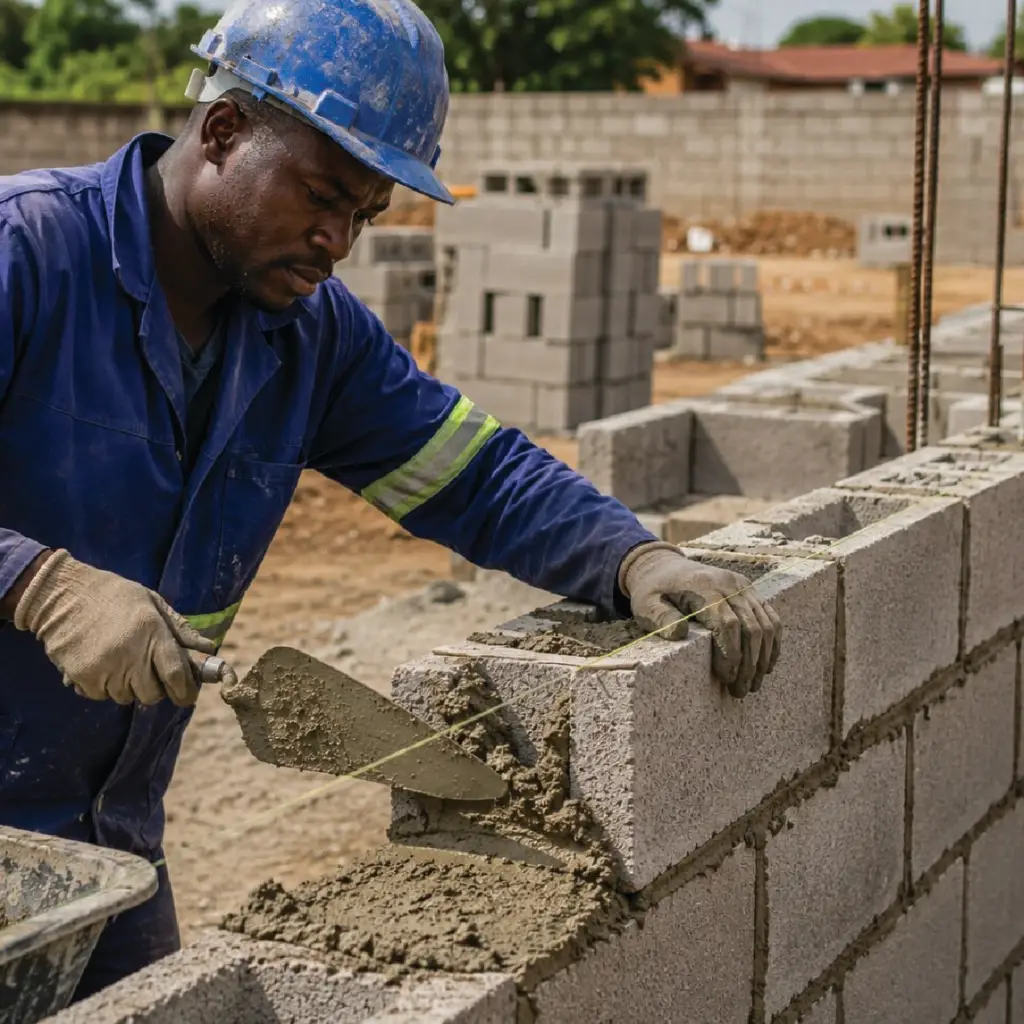
On South African building sites, bricklaying mortar is usually referred to as dagha. It must be workable enough for a bricklayer to spread, but cohesive enough to hold masonry together once it hardens.
Mortar is usually made from:
- Cement, which binds the mix
- Sand, which provides bulk, texture and workability
- Water, which activates the cement and controls workability
- Admixtures, in some controlled mixes, to improve handling, open time or setting behavior
Mortar is not the same as concrete. Concrete contains stone aggregate and is used for structural elements such as slabs, foundations and columns. Mortar is finer and is mainly used for bonding masonry.
| Feature | Mortar | Concrete |
|---|---|---|
| Main Use | Brickwork, blockwork and masonry joints | Slabs, foundations, columns and beams |
| Aggregate | Sand | Sand and stone |
| Texture | Finer and more workable | Coarser bulk material |
| Common Site Issue | Weak bond, cracking or poor workability | Low strength, poor compaction or poor curing |
| Typical Search Intent | Mortar mix, brick mortar mix | Concrete mix, surface bed, foundations |
What mortar mix ratio should you use?
For normal brickwork, mortar mix ratios commonly fall around 5:1 or 6:1 sand to cement by volume, depending on the required mortar class, cement type, sand quality and project specification.
A 6:1 mortar mix ratio means six parts sand to one part cement.
The key is consistency. A ratio only works if the batch is measured the same way every time. Shovel batching, heaped wheelbarrows and changing sand moisture can quickly change the real mix.
Industry standard note
Mortar performance is typically classified according to SANS 10164, which defines mortar strength classes for different masonry applications. Class I and Class II mortars are commonly used in South African construction depending on structural requirements and project specifications.
The correct mortar mix ratio depends on the type of brickwork being built. Higher-strength mortar is typically used for structural applications, while residential brickwork often uses lower-strength mixes that provide good bond strength and workability:
| Mortar Class | 28-Day Strength | Approximate Sand:Cement Ratio | Intended Use |
|---|---|---|---|
| Class 1 | 10 MPa | 3:1 | High-strength structural or multi-storey applications |
| Class 2 | 5 MPa | 5:1 | Normal load-bearing housing applications |
More cement does not automatically make a better mortar mix. Overly rich mixes can increase cost and shrinkage.
Expert site tip
Do not treat a ratio as a rough guess. A 5:1 or 6:1 mortar mix only means something if the sand and cement are measured consistently from batch to batch.
Industry standard note
Mortar performance is typically classified according to SANS 10164, which defines mortar strength classes for different masonry applications. Class I and Class II mortars are commonly used in South African construction depending on structural requirements and project specifications.
Cement type affects both mix performance and cost. The table below compares different cement options at equivalent mortar performance.
| Cement Type | Mix Ratio Cement:Sand | Cement kg/m³ | Sand kg/m³ (Dry) | Water Litres/m³ | Cement Cost per Bag (Rand) | Mortar Cost per m³ (Rand) | Cost Comparison |
|---|---|---|---|---|---|---|---|
| Masonry Cement 12.5 | 1:1.5 | 635 | 1,170 | 355.00 | 55.00 | 840.00 | Control Mix +60% |
| Masonry Cement 22.5X | 1:3.5 | 360 | 1,450 | 340.00 | 65.00 | 640.00 | Control Mix +20% |
| Cement 32.5 N or R | 1:6 | 225 | 1,570 | 335.00 | 75.00 | 525.00 | Control Mix |
| Cement 42.5 N or R | 1:7 | 200 | 1,625 | 320.00 | 80.00 | 515.00 | Control Mix -3% |
| Cement 52.5 N or R | 1:8 | 175 | 1,650 | 315.00 | 85.00 | 495.00 | Control Mix -5% |
Costs will vary. Always follow the specified mortar class and project requirements.
Which sand is best for mortar and plaster?
The best mortar sand and plaster sand is clean, well-graded sand that produces a workable mix without excessive water. Poor-quality sand can lead to weak cement mortar, cracking and inconsistent results.
As Quantum’s Mortar and Plaster Mixes tip explains, mortar sand and plaster sand are not always interchangeable. Plaster needs finer, more consistent sand because it is more exposed to drying and shrinkage.
Poor sand can cause:
- Sticky or putty-like mortar
- Higher water demand
- Lower final strength
- More shrinkage
- Poor plaster finish
- Cracking and rework
For plaster, the sand quality becomes even more important. Plaster is often only 15 to 20 mm thick. If the sand is wrong, adding more cement is not a reliable fix.
Simple sand check
If you’re unsure about the quality of your mortar sand or plaster sand, this simple site test can provide a useful indication:
- Dry out about 10 kg of sand on site.
- Mix 1 litre of cement with 5 litres of dry sand.
- Add 1 litre of water.
- Check whether the mix is wet enough and workable.
- If not, add another 0.5 litre of water.
- If it is still not workable, try another sand.
This is not a laboratory grading test, but it is a useful warning sign. If a sand needs too much water before it becomes workable, it may not produce reliable mortar or plaster.
The table below shows why plaster sand and mortar sand should not be treated as the same material. Their recommended grading ranges differ, which affects workability, water demand and finish quality.
Plaster Sand
| Sieve Size (mm) | Recommended Grading (%) |
|---|---|
| 4.75 | 100 |
| 2.36 | 90–100 |
| 1.18 | 70–100 |
| 0.60 | 40–100 |
| 0.30 | 5–65 |
| 0.15 | 0–20 |
| 0.075 | 0–10 |
Brick Mortar Sand
| Sieve Size (mm) | Recommended Grading (%) | Typical Grading Range (%) |
|---|---|---|
| 4.75 | 100 | 100 |
| 2.36 | 100 | 100 |
| 1.18 | 100 | 90–100 |
| 0.60 | 100 | 70–100 |
| 0.30 | 5–75 | 35–90 |
| 0.15 | 0–25 | 10–45 |
| 0.075 | 0–10 | 3–25 |
How should mortar be batched on site?
A consistent mortar mix starts with consistent measuring. Changes in batching can affect strength, workability, colour and material usage.
A standard builder’s wheelbarrow is commonly treated as 65 litres. For a 6:1 mortar mix ratio, a practical site batch is:
- Two pockets of cement
- Six level wheelbarrows of sand
- Water added gradually until the mix is workable
The key word is level. Heaped wheelbarrows and damp sand can change the actual ratio and produce inconsistent results.
Expert site tip
Use the same batching method for the entire job. Changing between level and heaped wheelbarrows, or switching between dry and damp sand without adjustment, can result in inconsistent cement mortar.
Why do plaster and brickwork mixes fail?
Most problems with mortar mixes and plaster can be traced back to poor sand, too much water, inconsistent batching or surfaces that are not properly prepared.
Common causes include:
- Poor-quality mortar sand or plaster sand
- Too much water
- An incorrect mortar mix ratio
- Direct sun or wind drying the mix too quickly
- Absorbent brickwork pulling water from the mix
- Poor surface preparation
- Inconsistent batching
Plaster is particularly vulnerable because it is applied in a thin layer and dries much faster than bricklaying mortar. Pre-wetting absorbent brickwork and protecting fresh plaster from direct sun can help reduce cracking.
Brick type also affects performance and material usage. Hollow, frogged and perforated bricks require significantly more dagha than solid bricks, so this should be allowed for when estimating materials.
Expert site tip
Good plaster starts with good brickwork. Straight, level walls require less plaster, reduce material usage and lower the risk of shrinkage cracking.
How can you reduce mortar and plaster waste?
Reducing waste starts with good planning. The right materials, consistent batching and proper storage can significantly reduce the amount of mortar or plaster that ends up in a skip instead of on the wall.
Common causes of waste include:
- Mixing more material than the team can use
- Using poor-quality or inconsistent sand
- Guessing the mortar mix ratio
- Adding too much water
- Using heaped wheelbarrows instead of level measures
- Poor brickwork alignment that increases plaster thickness
- Leaving materials exposed to sun, wind or rain
Standard mortar and plaster typically remain workable for several hours, depending on weather conditions. If material is not being used immediately, keep it covered to reduce moisture loss and maintain workability.
Professionally batched mortars are produced using measured raw materials and consistent mix designs. This helps reduce the variation often associated with manual site batching.
Where consistency, storage space or material waste become ongoing challenges, ready mix mortar or ready mix plaster may be a better alternative to mixing on site.
Quick answers to common mortar mix questions
What is the best mortar mix ratio for brickwork?
For most brickwork, a mortar mix ratio of 5:1 or 6:1 sand to cement is commonly used. The correct ratio depends on the specification and application.
How many parts sand to cement should a mortar mix contain?
Most site-mixed mortar mixes use five or six parts sand to one part cement. Consistent measuring is more important than adding extra cement.
What is the best mortar sand?
The best mortar sand is clean, well graded and produces a workable mix without excessive water.
Can plaster sand be used for mortar?
Not always. A mortar mix for plastering and a bricklaying mortar serve different purposes, so plaster sand and mortar sand are not automatically interchangeable.
What is the difference between mortar and concrete?
Mortar bonds bricks and blocks together, while concrete is used for structural elements such as slabs, foundations and columns.
A good mortar mix is about more than just cement and sand. The right materials, consistent batching and good site practices can improve workability, reduce waste and help produce better brickwork and plaster.
A good mortar mix is about more than just cement and sand. The right materials, consistent batching and good site practices can improve workability, reduce waste and help produce better brickwork and plaster.
Looking for more practical concrete guidance? Browse Quantum’s Technical Tips library.