






Surface Bed Guide: Construction, Joints and Curing
Learn how base preparation, slab thickness, joint cutting, curing and aftercare help reduce cracking and surface defects in a surface bed.
A durable surface bed depends on more than the concrete mix. The base must be properly prepared, levels must be controlled, the slab must be thick enough, joints must be planned and cut correctly, and curing must begin early enough to reduce cracking and surface defects.
What is a surface bed?
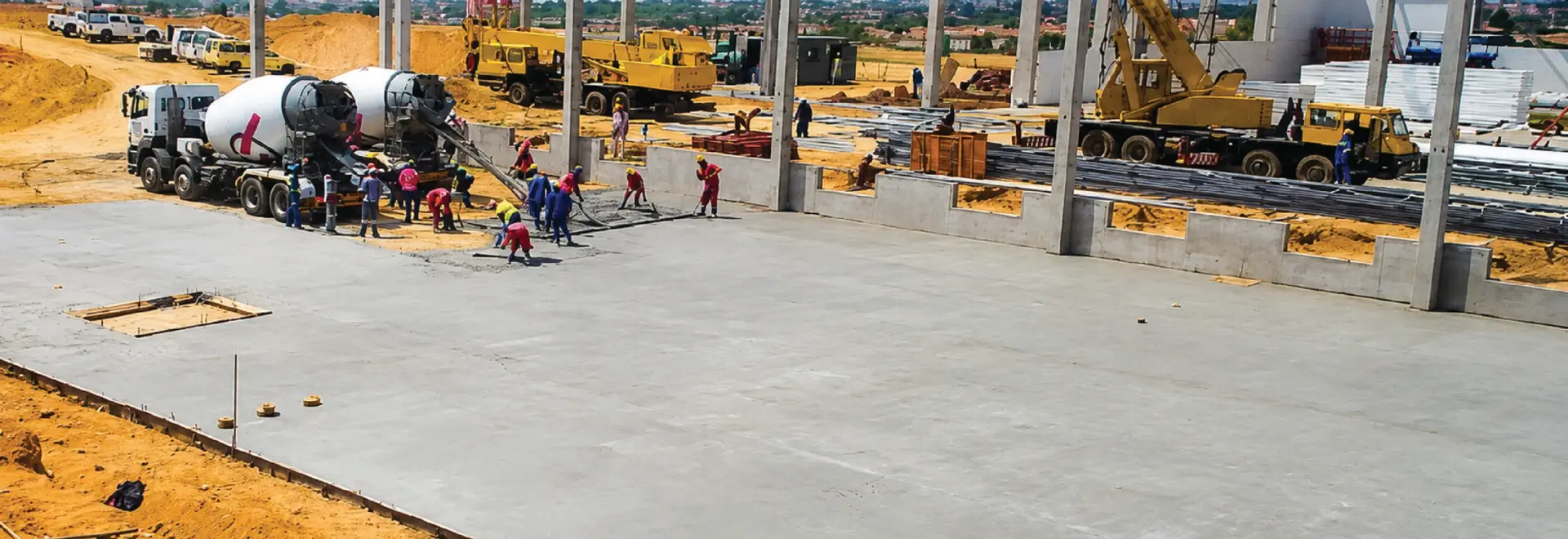
A surface bed is a ground-supported concrete floor slab cast directly on a prepared base or subbase.
Unlike suspended or precast slabs, a concrete surface bed relies heavily on the material underneath it. If the base is poorly compacted, uneven, too dry or unstable, the floor above it is more likely to crack or develop surface defects.
Good surface bed construction starts before the concrete arrives. The subbase, levels, slab thickness, joint layout, finishing and curing all need to be planned before placing begins.
How should the base be prepared before concrete is placed?
A concrete surface bed needs a firm, level and well-compacted base before concrete is placed.
Poor base preparation is one of the main reasons surface beds crack or fail early. If the subbase moves, settles or dries the concrete too quickly, the slab has to deal with problems that should have been corrected before the pour.
For good surface bed preparation, the base should be built up in controlled layers and compacted properly. As a practical guide, the base should be placed in 150 mm layers and compacted to a minimum of 93% MOD AASHTO.
The base should also be dampened shortly before placing concrete, but water must not be allowed to pool on the surface. A dry base can draw moisture from the concrete too quickly, while standing water can create weak or inconsistent areas.
Base and slab preparation checks
| Item | Practical Guidance |
|---|---|
| Subbase material | Use approved, clay-free G5 subbase material |
| Layer thickness | Place and compact the base in 150 mm layers |
| Compaction | Compact to minimum 93% MOD AASHTO |
| Moisture before placing | Dampen the base, but avoid pooled water |
| Slab thickness | Minimum 150 mm |
| Concrete strength | Minimum 30MPa concrete |
Expert site tip
Do not treat base preparation as a minor item. A well-compacted, level and dampened base gives the concrete a much better chance of performing properly.
What thickness and concrete strength should be used?
A surface bed should be thick enough for its intended use and supported by a properly prepared base. As a practical guide, a minimum slab thickness of 150 mm and 30MPa concrete are often recommended for demanding floor applications.
Thicker slabs generally perform better under load and are less sensitive to minor variations in the base. As a rule of thumb, increasing slab thickness by 25 mm can significantly improve floor life and performance.
Levels are equally important. If the prepared base is too low or uneven, the slab may use more concrete than expected and vary in thickness across the floor.
How do joints help prevent cracking?
Joints help control where a surface bed is likely to crack as the concrete shrinks and moves.
Concrete naturally shrinks as it hardens and dries. Jointing does not stop that movement, but it helps guide it into planned lines instead of random cracks across the floor.
For best results, saw cut joints in concrete slabs should be made as soon as possible after casting, before random cracking starts. The cut must be early enough to control cracking, but not so early that the edges break away or ravel. As a practical guide, saw cuts should be made within 24 hours and at least one quarter of the slab thickness.
Main joint types in surface beds
| Joint Type | Purpose | Typical Use |
|---|---|---|
| Saw cut or contraction joint | Helps control shrinkage cracking | Across slab panels |
| Construction joint in concrete | Separates planned pour breaks | Where one pour ends and another begins |
| Concrete expansion joint | Allows movement where required | Selected movement areas |
| Isolation joints | Separates the slab from fixed elements | Around columns, walls and penetrations |
Concrete floor joints should be planned before the pour, not after it. Keep panel shapes as regular as possible and avoid long, narrow sections. As a practical guide, rectangular panels should be no more than 1.3 times the length of the short side.
Re-entrant corners should also be avoided where possible, as these inside corners are common starting points for cracks. Around columns and other fixed elements, use isolation joints rather than relying on saw cuts alone.
Expert site tip
A good joint layout starts before the concrete arrives. Regular panel shapes, properly placed isolation joints and early saw cut joints in concrete slabs can significantly reduce random cracking
How should concrete be finished and protected?
Concrete should be finished at the right time and protected from rapid drying caused by sunlight, wind and draughts.
Overworking the surface can create problems, particularly if cement or water is added during finishing. Instead, allow the concrete to reach the correct finishing stage and avoid unnecessary reworking.
For indoor surface beds, placing concrete after the roof has been erected and the sides have been sheeted can help reduce drying from direct sunlight and draughts. For outdoor slabs, protect exposed areas where possible and complete any broom finish concrete surface as soon as practical before curing begins.
Good finishing is about more than appearance. It helps improve surface durability, reduce dusting and minimise the risk of early cracking.
Why is curing and aftercare important?
Concrete curing helps a surface bed retain moisture long enough to develop strength and reduce cracking, dusting and weak surface development.
Fresh concrete needs moisture to gain strength properly. If the surface dries too quickly, the risk of cracking increases, particularly in hot, dry or windy conditions. Direct sunlight, draughts and large exposed floor areas can all accelerate moisture loss.
Practical curing options include:
- Plastic sheeting
- Fog sprays
- Resin-based curing compounds
- Protecting the floor from wind and direct sunlight
- Keeping early traffic and damage off the surface
Good concrete aftercare continues after curing begins. Early traffic, dragging materials or impact damage can harm the floor before it has gained enough strength.
Expert site tip
If fresh concrete is losing moisture faster than it can replace it through bleeding, making cracking much more likely. Start curing as soon as practical and protect exposed areas from sun and wind.
How do you avoid common surface bed problems?
Most surface bed problems can be avoided by preparing the base correctly, using suitable concrete, planning joints early and curing the floor properly.
Before Placing
- Check that the G5 subbase is suitable and clay-free
- Confirm compaction and levels
- Check the required slab thickness
- Confirm the concrete strength
- Allow for isolation joints around columns
- Check exposure to sun, wind and draughts
During placing
- Place concrete evenly
- Avoid unnecessary delays
- Do not add cement or water to the surface
- Finish at the right time
- Use broom finish concrete where suitable
- Protect exposed areas from rapid drying
After placing
- Saw cut joints early
- Start concrete curing as soon as practical
- Protect the surface from early traffic and damage
- Monitor areas exposed to wind, sunlight or draughts
Expert site tip
A successful surface bed is planned before the concrete arrives. The subbase, levels, thickness, joints, curing and aftercare all need to work together.
Quick answers to common surface bed questions
What is a surface bed?
A surface bed is a ground-supported concrete floor slab cast directly on a prepared base or subbase.
What is surface bed construction?
Surface bed construction includes base preparation, concrete placing, finishing, joint cutting, curing and aftercare.
What thickness should a surface bed be?
A practical minimum thickness is 150 mm, but final concrete slab thickness should follow the project specification or engineer’s requirements.
When should saw cut joints in concrete slabs be made?
Saw cut joints in concrete slabs should be made as early as possible without damaging the edges, and before random cracking occurs.
Why are isolation joints needed around columns?
Isolation joints allow the slab to move independently around fixed elements such as columns, walls and penetrations.
Why does a concrete surface bed crack?
A concrete surface bed can crack because of poor base preparation, rapid drying, late joint cutting, missing isolation joints, poor curing or badly proportioned panels.
One thing to remember
A successful surface bed depends on more than the concrete itself. Good base preparation, correct slab thickness, properly planned concrete floor joints, and early concrete curing all work together to reduce cracking and improve long-term floor performance.
Looking for more practical concrete guidance? Browse Quantum’s Technical Tips library.