





Concrete cracks are not all caused by the same problem. The main types of cracks in concrete include plastic settlement cracks, plastic shrinkage cracks, early thermal contraction cracks and crazing. Timing, location, weather and surface condition can help identify the likely cause and the best prevention approach.
What this guide covers
- The main types of cracks in concrete
- When different crack types usually appear
- Where each crack type commonly occurs
- How bleeding, drying, cooling and restraint affect cracking
- Why wind, temperature and humidity increase evaporation risk
- Practical ways to reduce cracking before and after placing
What are the main types of cracks in concrete?
The types of cracks in concrete can usually be identified by when they appear and what causes them. Some develop while the concrete is still plastic, while others form after it has started hardening or cooling.
The four most common crack types are:
- Plastic settlement cracks occur when fresh concrete settles around reinforcement or changes in section depth before it hardens.
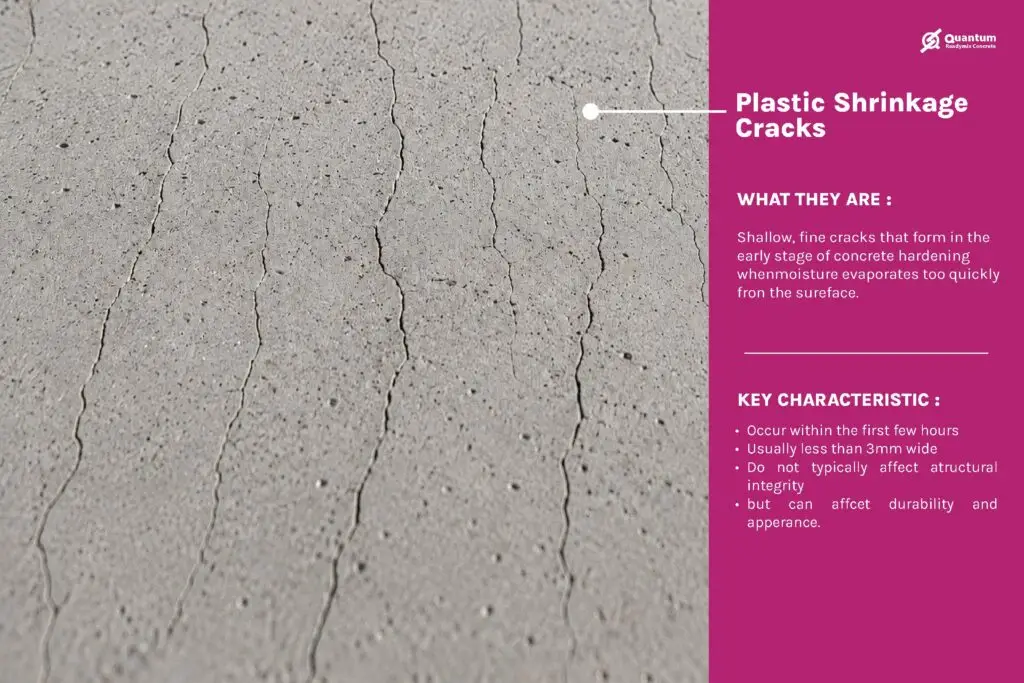
- Plastic shrinkage cracks develop when moisture evaporates from the surface faster than bleed water can replace it.
- Early thermal contraction cracks form as concrete cools and contracts while movement is restrained.
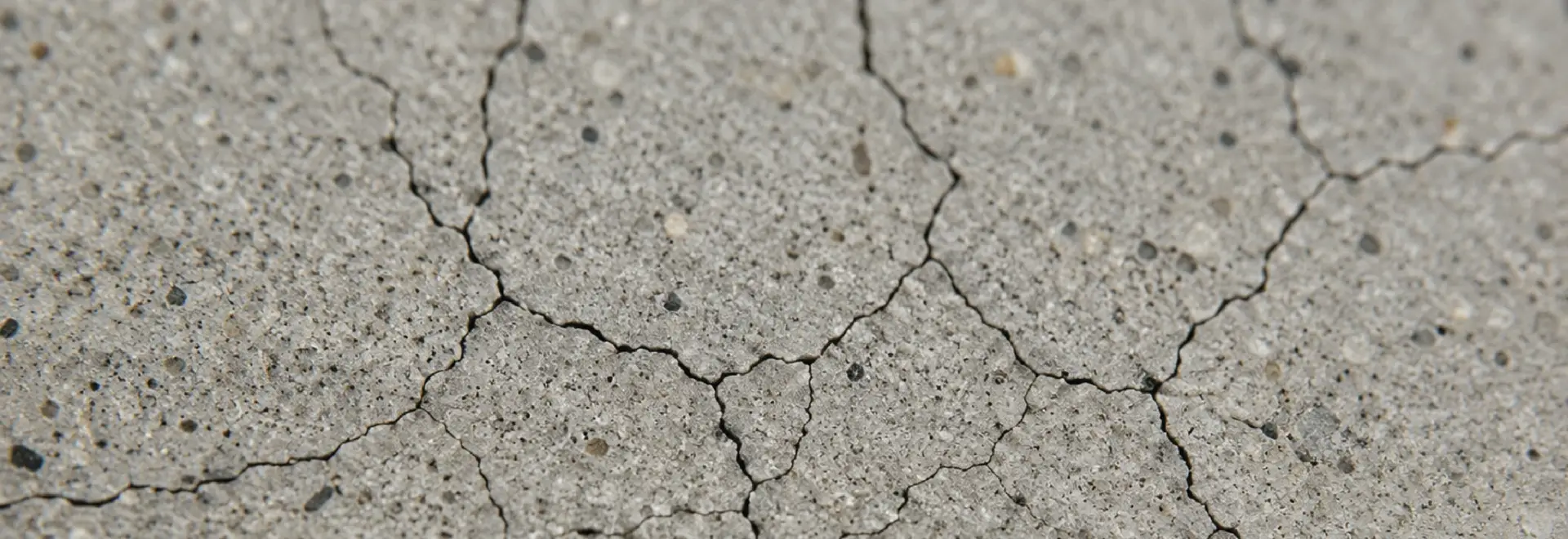
- Crazing appears as a network of very fine, shallow surface cracks, often linked to rapid drying, poor curing or overworking the surface.
Each crack has its own characteristics, which is why identifying the crack type is the first step before deciding on the most appropriate preventative measures.
How can you identify concrete cracks by timing and location?
Concrete cracks can often be identified by when they appear, where they appear and what site conditions were present at the time.
| Crack Type | Typical Time of Appearance | Common Location | Main Cause | Practical Prevention |
|---|---|---|---|---|
| Plastic settlement cracks | 10 minutes to 3 hours | Over reinforcement, top of columns, changes in slab depth | Excess bleeding and settlement while concrete is still plastic | Reduce bleeding, improve placing practice and revibrate where appropriate |
| Plastic shrinkage cracks | 30 minutes to 6 hours | Roads, slabs and reinforced concrete slabs | Rapid early drying and low bleeding | Protect fresh concrete from wind, sun and drying, and begin curing early |
| Early thermal contraction cracks | 1 day to 2 or 3 weeks | Thick walls and thick slabs | Rapid cooling, heat generation and temperature gradients | Reduce heat, insulate where needed and reduce restraint where possible |
| Crazing | 1 to 7 days, sometimes much later | Fair-faced concrete and floated slabs | Rich mixes, rapid drying, poor curing or over-trowelling | Improve curing, finishing and surface protection |
This table should be used as a practical guide, not as a substitute for a site assessment. Crack width, depth, movement and the type of concrete element also matter.
Why does concrete crack?
Concrete cracks because it is continually changing as it settles, hardens, shrinks and responds to temperature. Cracking occurs when the stresses created by these changes become greater than the concrete can resist at that stage of its development.
The important point is that cracking is a symptom, not a the actual problem. The same visible crack can have very different underlying causes depending on when it appeared, where it formed and the conditions during placing and curing.
Before deciding how to deal with a crack, ask:
- When did it first appear?
- Where is it located?
- What were the weather conditions during placing?
- Was the concrete still plastic or already hardened?
- Was the element heavily reinforced or restrained?
Answering these questions will often identify the most likely cause before any remedial action is considered.
What causes plastic shrinkage cracks in concrete?
Plastic shrinkage cracks in concrete form when the concrete surface loses moisture faster than bleed water can replace it.
This usually happens while the concrete is still plastic. The surface dries, shrinks and cracks before the concrete has developed enough strength to resist that shrinkage.
Plastic shrinkage cracks often appear on:
- Roads
- Large slabs
- Reinforced concrete slabs
- Exposed concrete surfaces
- Slabs placed in hot, dry or windy conditions
These cracks may appear as diagonal, random or roughly parallel cracks across the surface. Shrinkage cracks in concrete slabs are more likely where wind, direct sun and low humidity accelerate evaporation.
Not all concrete shrinkage cracks are the same. This article focuses mainly on early-age plastic shrinkage, not long-term drying shrinkage or repair methods.
Good curing and surface protection are important because plastic shrinkage cracking is strongly linked to rapid moisture loss from the concrete surface.
How does weather increase concrete cracking risk?
Weather increases concrete cracking risk when temperature, wind and low humidity combine to increase evaporation from the concrete surface.
Temperature is not the only factor. A warm day with low humidity and wind can dry fresh concrete very quickly. Wind is especially important because it removes surface moisture and increases evaporation.
Practical weather effects include:
- A breeze of 15 km/h can increase evaporation to about four times the rate in still air.
- Wind of 40 km/h can increase evaporation to about nine times the rate in still air.
- If air and concrete are both at 20°C, evaporation can be twice that at 10°C.
- A drop in relative humidity from 90% to 50% can increase evaporation fivefold.
- Evaporation rates greater than 0.5 kg/m²/hour are likely to require precautions against premature drying.
The evaporation-rate nomogram used in the source guidance is adapted from the ACI Manual of Concrete Practice. It shows how air temperature, concrete temperature, wind speed and relative humidity work together.
Gauteng spring conditions can create a real drying risk. A combination of warm air, lower humidity and moderate wind can increase evaporation even before the concrete looks dry.
How to prevent concrete from cracking on site
How to prevent concrete from cracking starts with managing site conditions, curing, bleeding, finishing and restraint before cracks appear.
Not every crack can be prevented, but many early-age cracking risks can be reduced through better planning and site practice.
Practical prevention measures include:
- Avoid placing concrete in unfavourable ambient conditions without precautions.
- Protect fresh concrete from wind, sun and rapid drying.
- Start curing as early as is practical.
- Avoid over-trowelling floated surfaces.
- Manage bleeding where possible.
- Use suitable finishing timing.
- Reduce heat or insulate thick sections where needed.
- Consider restraint in design and detailing.
- Use appropriate jointing practice where relevant.
This is a prevention section, not a repair guide. Once concrete has cracked, the correct response depends on the crack type, location, width, depth and whether movement is continuing.
For surface beds and slabs, jointing and slab preparation also play an important role. Learn more with these helpful articles.
Quick answers to common concrete cracking questions
Are all concrete cracks structural?
No. Not all cracks are structural, but cracks should be assessed by timing, location, width, depth, movement and the concrete element affected.
Can concrete crack even if the mix is correct?
Yes. Concrete can crack because of weather, restraint, poor curing, finishing practice, bleeding or rapid drying, even when the mix itself is suitable.
Why do cracks appear after formwork is removed?
Some cracks become visible only after the concrete is exposed. Fair-faced concrete can also show crazing where surface drying, formwork conditions or curing were not ideal.
Can curing stop all concrete cracks?
No. Curing helps reduce moisture-loss cracking, but it cannot prevent cracks caused by poor jointing, restraint, design issues, ground movement or excessive loading.
One thing to remember
Not all concrete cracks have the same cause. The timing, location and pattern of the crack usually tell the story. Good placing practice, early curing, weather protection and careful finishing can reduce many early-age cracking risks before they become visible.
Looking for more practical concrete guidance? Browse Quantum’s Technical Tips library.